
Psychology > Technology
What two innovations, separated by 130 years, reveal about building brands today

Last week, I explored how brand growth patterns are shifting from marketing-driven awareness to product-driven trust. But what does that look like in practice?
The next few articles of The Intersection will be from Chapter 1: “The Definition of Brand” of my Japanese book, “Brand Shift: Growth Strategy in the Age of Trust.”
This article presents a case study in brand-building, illustrating why the best product doesn’t always win unless it earns trust.
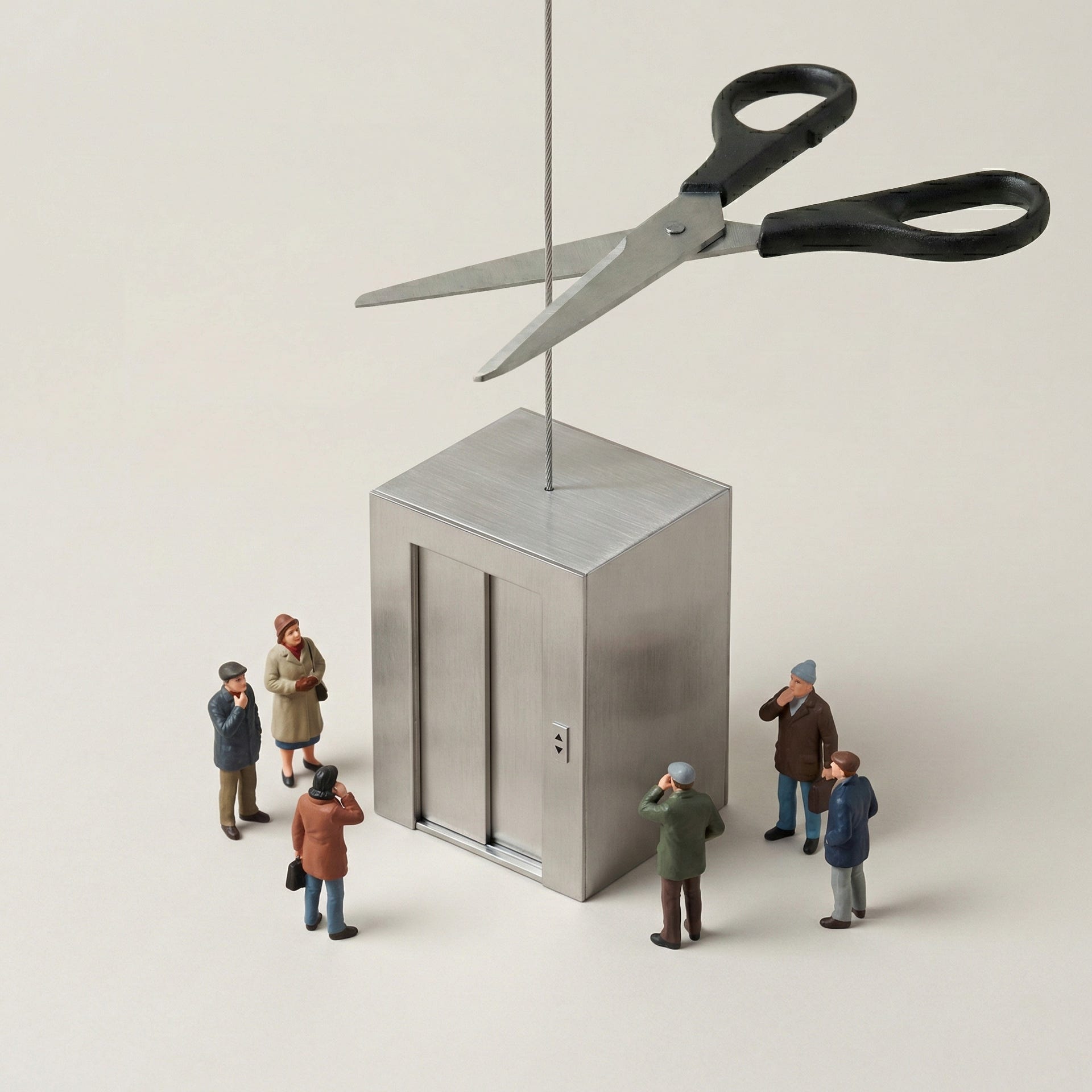
The Brand Problem of Automatic Elevators
The automatic elevator was invented in 1892.
This technology was revolutionary. Riders could press a button and reach their floor without an operator. It was convenient and cost-effective, especially for building managers. Engineers had perfected the mechanics. The product was ready. Newspapers and radio assured the public it was safe.
Yet, for the next 50 years, nobody wanted to ride one without an operator in it. People thought they would die.
The technology worked perfectly. The problem lay elsewhere: a lack of trust.
The problem was psychology.
In the era of elevator operators, they were not just there to operate machinery. Dressed in uniform, they greeted passengers with smiles, eased their anxieties, and guided them to their destination. Their presence served as an unspoken guarantee: “This elevator is safe.”
People trusted the human, not the technology.
No matter how rational automatic elevators seemed, people’s instinctive fear couldn’t be engineered away. Marketing couldn’t override the emotional barrier. They couldn’t message their way into people’s minds.
How did they overcome this anxiety?
The breakthrough came from a massive elevator operator strike in New York in 1945.
With the city at a standstill, people had no choice but to press the button themselves. This crisis made developers ask: “How can we make people trust elevators?”
Emergency stop buttons, built-in telephones, and alarm systems. The elevator interface was refined element by element.
The shift was crucial: designing a visible trust infrastructure, not improving the core technology.
Marketing didn’t drive adoption. Superior specs didn’t sell it.
Trust made visible—that’s what made the difference.
Can you trust that brand?
130 years later, the pattern repeats with Waymo.
Call an app, and a driverless car pulls up to take you to your destination.
Last year, I took my first Waymo ride. It felt awkward getting in a car with an empty driver’s seat. Then I noticed the screens—front and back seats—constantly displaying moving objects around the car: vehicles, bicycles, pedestrians, pets.
It was night, and I couldn’t see these objects with my naked eyes. But watching the sensors track them in real-time assured me. I felt safe. It earned my trust.
Waymo made trust visible.
First-time riders report the same reaction: “It felt safer than expected.” Like elevators, this service could be fatal with one mistake. You’re trusting the technology with your life.
Waymo’s autonomous vehicles are twelve times safer than human-driven cars. Yet, this statistic alone doesn’t convince most.
People need more than numbers.
Waymo is gaining acceptance by building what elevators eventually built: a multilayered, visible trust structure. Not better technology alone, but visible and verifiable.
130 years separate the elevator from Waymo, yet the pattern is the same.
In both cases, the technology was ready years before public acceptance. What took time was building psychological infrastructure: emergency buttons and phones for elevators, data transparency, and emergency systems for Waymo.
Technology creates capability. Psychology determines choice.
To borrow words from the inimitable Rory Sutherland, “If you have a great product but nobody trusts you, you don’t have a great product.”
The most sophisticated technology in the world is worthless if people won’t use it. The elevator worked perfectly in 1892. Waymo’s cars are safer than human drivers. But adoption doesn’t follow engineering timelines. It follows psychological ones.
Psychology > Technology. Always.
Next week, we’ll get into the historical context of Brand. Stay tuned.